IoT Isn't Just for Big Companies Anymore
When most business owners hear 'Internet of Things,' they picture massive factory floors with thousands of sensors or smart city infrastructure costing millions. That was true five years ago. Today, the cost of IoT devices has dropped dramatically, and the use cases for small-to-mid-sized businesses are practical, proven, and surprisingly affordable.
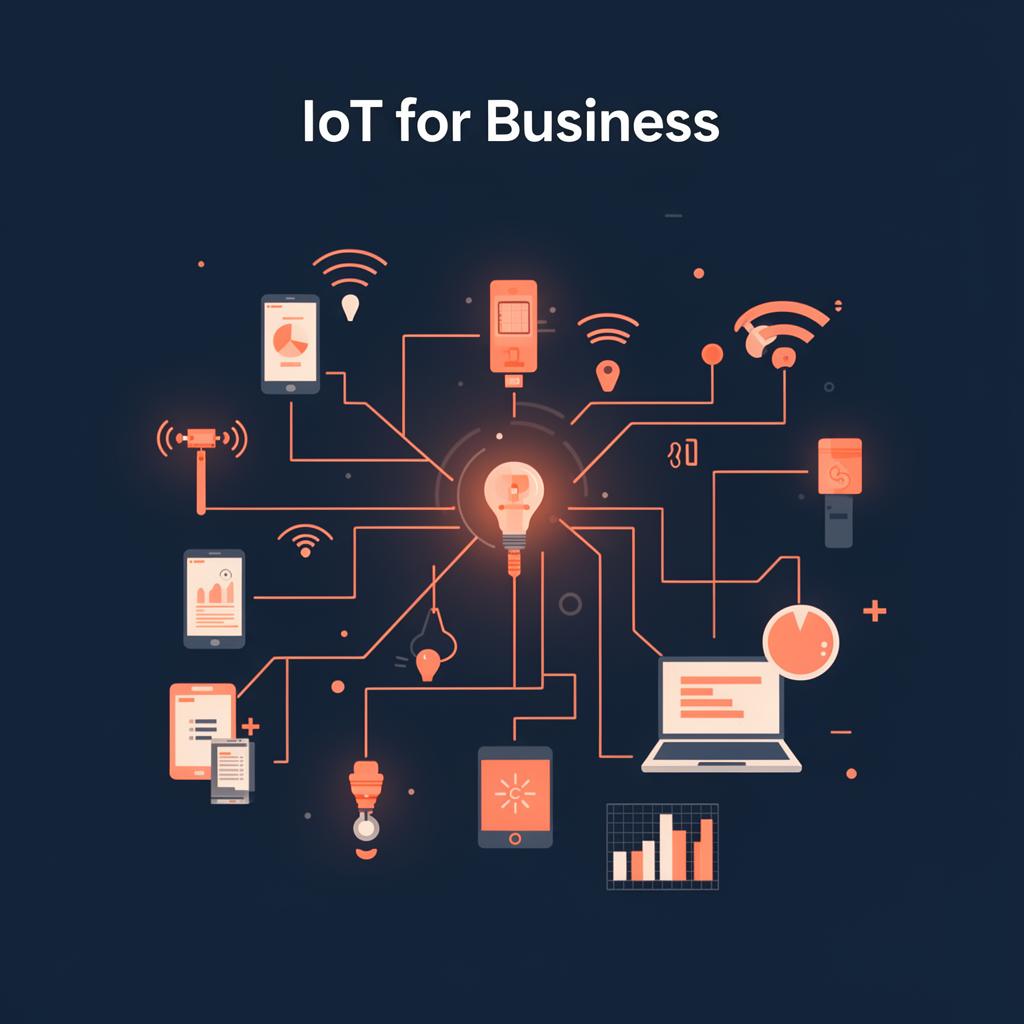
IoT simply means connecting physical devices—thermostats, door locks, vehicles, equipment, inventory—to the internet so they can send data, receive commands, and automate decisions. The value isn't in the technology itself; it's in the operational visibility and efficiency it creates.
Asset Tracking: Know Where Everything Is
Lost, misplaced, or stolen equipment costs small businesses thousands every year. Whether it's construction tools, medical equipment, or delivery vehicles, knowing where your assets are at all times eliminates waste and prevents theft.
Small GPS trackers and Bluetooth beacons can be attached to anything from a power drill to a delivery van. Real-time location data feeds into a simple dashboard where you can see every asset on a map, set geofence alerts, and pull usage reports.
A regional plumbing company we worked with was losing $15,000 per year in misplaced tools and unauthorized vehicle use. After deploying asset trackers on their fleet and high-value equipment, losses dropped to near zero within three months.
Businesses using IoT asset tracking report 25–30% reduction in equipment loss and theft.
Environmental Monitoring: Protect What Matters
Temperature, humidity, air quality, water leaks—these are silent threats that can cause massive damage before anyone notices. IoT sensors provide continuous monitoring with instant alerts when conditions deviate from safe ranges.
Restaurants and food service businesses use temperature sensors in walk-in coolers and freezers. If the temperature rises above safe levels, the owner gets a text within seconds—not the next morning when thousands of dollars in inventory has spoiled.
Medical offices monitor pharmaceutical storage conditions for regulatory compliance. Property managers detect water leaks before they become flood damage. The sensors cost under $50 each and can prevent losses of $10,000 or more.
Start with your highest-risk area: cold storage for food businesses, server rooms for offices, or warehouses for inventory-heavy operations.
Predictive Maintenance: Fix It Before It Breaks
Equipment breakdowns don't just cost money to repair—they cost money in downtime, missed deadlines, and emergency service calls. IoT-enabled predictive maintenance uses sensors to monitor equipment health and alert you before failures happen.
Vibration sensors on HVAC units detect bearing wear weeks before a compressor fails. Current monitors on motors identify power draw anomalies that signal impending problems. Temperature sensors on electrical panels catch overheating connections.
The shift from reactive to predictive maintenance typically reduces unplanned downtime by 30–50% and extends equipment lifespan by 20–40%. For businesses that depend on machinery, this alone justifies the entire IoT investment.
Smart Energy Management
Energy costs are a significant line item for any business with a physical location. IoT-enabled energy management goes beyond programmable thermostats—it creates an intelligent system that optimizes consumption based on occupancy, weather, and usage patterns.
Smart sensors detect when rooms are unoccupied and adjust lighting and climate automatically. Energy monitors identify which equipment is drawing excessive power. Automated schedules ensure HVAC systems aren't running at full blast in an empty building.
Businesses implementing IoT energy management consistently see 15–25% reductions in utility costs. For a company spending $3,000/month on energy, that's $5,400–$9,000 saved per year—and the system typically pays for itself within 6 months.
Getting Started Without Overwhelming Your Budget
The beauty of IoT is that you don't need to deploy everything at once. Start with one high-impact use case—the problem that costs you the most money or causes the most headaches. Deploy a small pilot, measure the results, and expand from there.
Most IoT solutions for SMBs cost $10–50 per device per month, including hardware, connectivity, and the software platform. Compare that to the cost of the problem you're solving, and the ROI becomes obvious.
Work with a partner who understands both the technology and your business. Off-the-shelf IoT solutions often need configuration and integration to deliver real value. The right partner helps you avoid expensive mistakes and get to ROI faster.
Key Takeaways
- IoT is now affordable and practical for SMBs—not just enterprise
- Start with asset tracking or environmental monitoring for quick wins
- Predictive maintenance reduces downtime by 30–50%
- Smart energy management pays for itself within 6 months
- Deploy in phases—one high-impact use case at a time
Need Help With This?
Our team specializes in iot. Let's talk about how we can help your business.
Get a Free Consultation